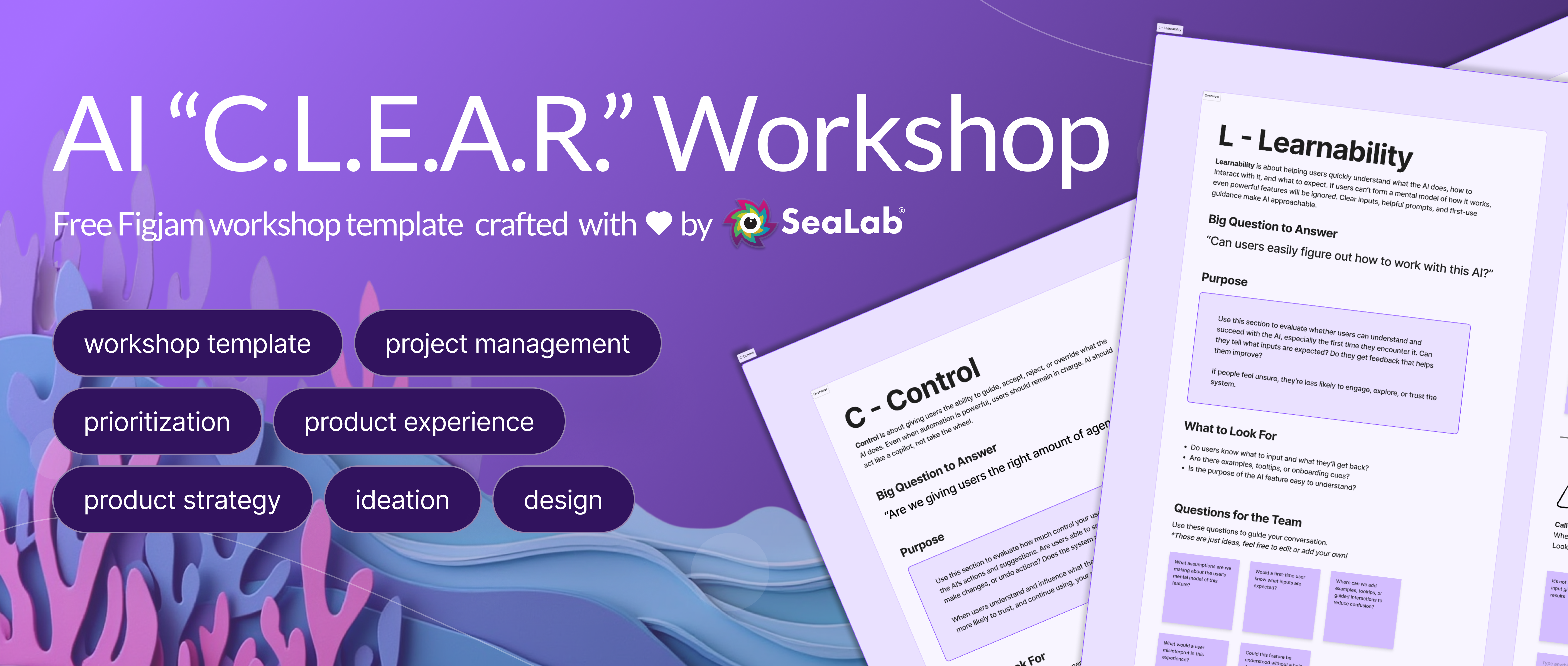
AI is everywhere, but clarity isn't. So, we built a free FigJam workshop that helps teams evaluate AI features through a practical lens we call C.L.E.A.R. It's a framework for evaluating AI behavior, trust, and usability, not just accuracy, so your team can move from vague concerns to specific, actionable decisions. In one focused session, you'll spot gaps, reduce risk, and leave with next steps you can actually ship.
Here's what's new from the dive deck:
Why C.L.E.A.R, a simple checklist for usable, trustworthy AI:
- Control: Users can start, stop, undo, and set boundaries.
- Learnability: First-time and repeat use feel intuitive.
- Explainability: The system communicates what it did and why.
- Accountability: Ownership, safeguards, and escalation paths exist.
- Responsiveness: Feedback is timely, helpful, and proportionate.
Examples in practice
- A review & confirm step before applying AI-suggested changes
- Prompt examples and light onboarding for first-time use
- A "Why this result?" link that reveals key factors
- Clear error states with undo/retry, plus escalation paths
- A visible feedback control that leads to improvements users can see
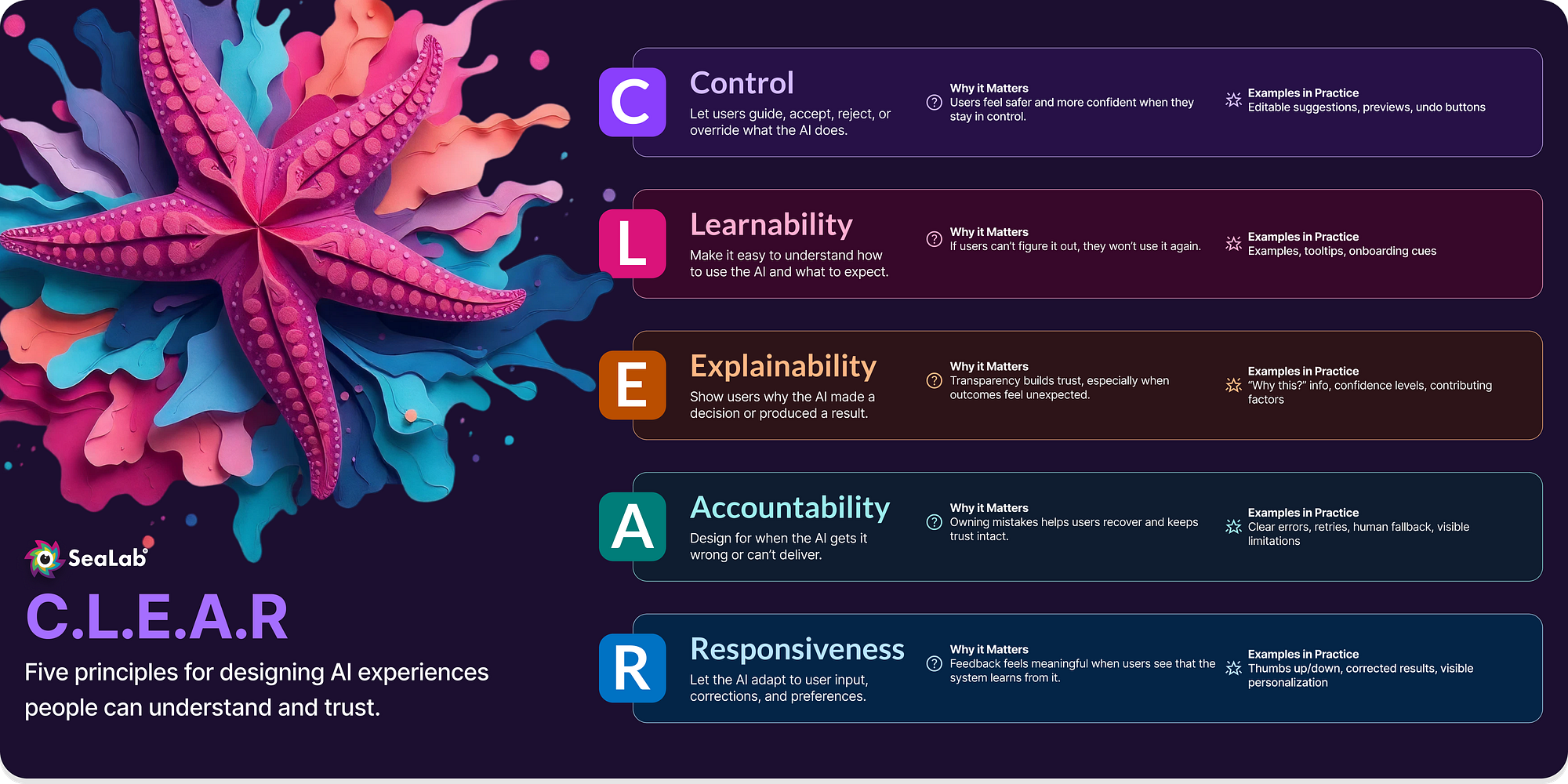
C.L.E.A.R. AI Framework explained: C for allow user to control the AI output, L for Learnability, E for explainability, A for accountability, and R for Responsiveness
What's inside (and why it helps)
- Five cards — one for each C.L.E.A.R principle
- For every card: What's Working, Gaps & Risks, Ideas & Next Steps, Questions for the Team
- Facilitation notes and prompts you can paste directly into the board
- Before / During checklists to keep the session tight
- A tidy space to capture owners and deadlines so momentum sticks
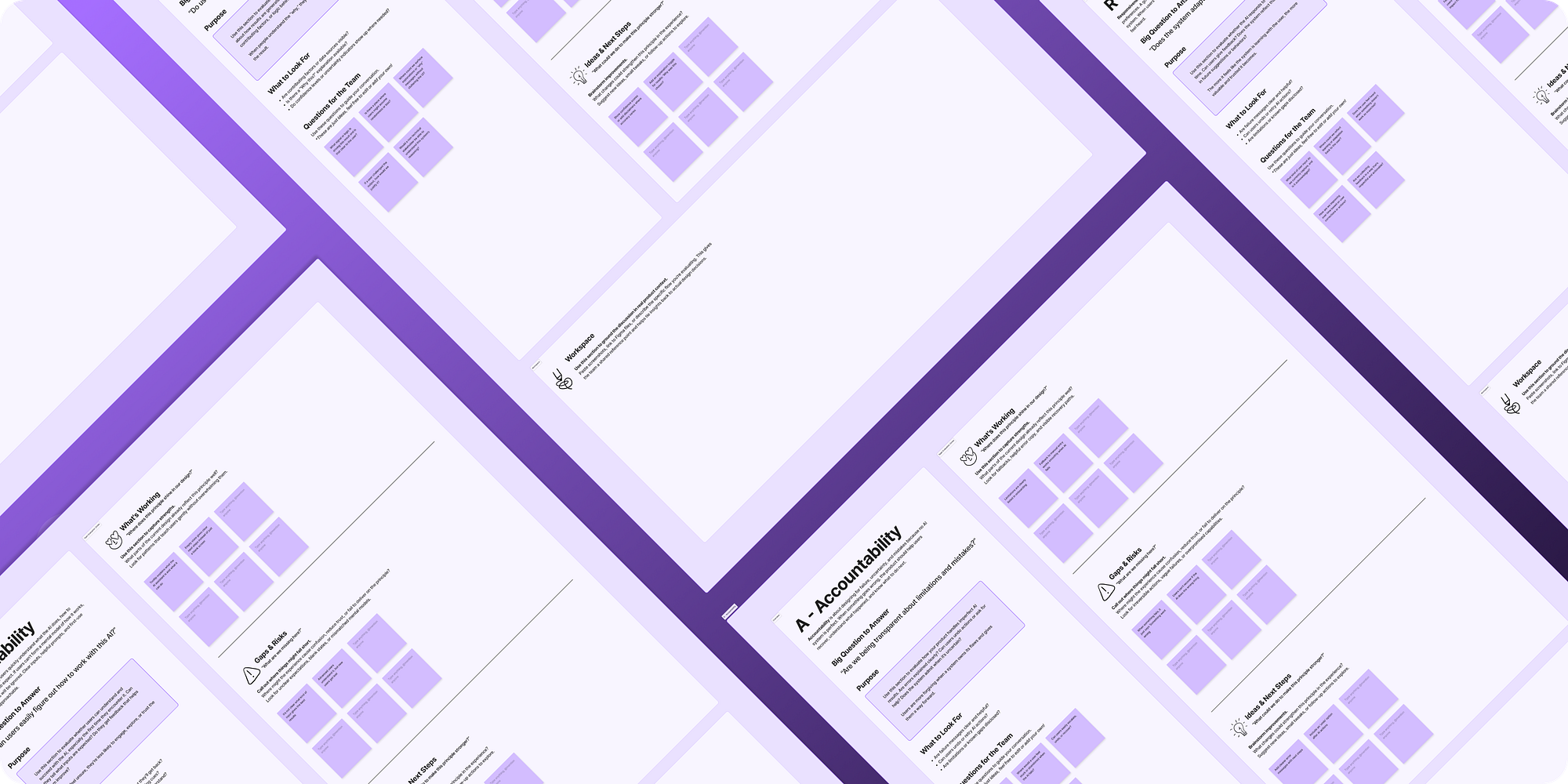
Top down view of each detailed Figjam template for each of the CLEAR steps. Purple theme with purple sticky notes and instructions visible
How to run it (fast and well)
Before: Pick a feature, invite PM/Design/Eng/Research, add relevant mocks or flows.
During: Walk the team through each card: What's Working, Gaps & Risks, Ideas & Next Steps. Use built-in questions to dig deeper. Vote to prioritize.
After: Assign owners, plug actions into your roadmap, and schedule a quick follow-up.
Who it's for
- Product teams launching or refining AI-powered features
- Founders and leads aligning on risk, usability, and trust
- Design ops and research teams running recurring audits
For a look at how conversational AI agents can be designed with the same level of rigor, see our prompt engineering work for an enterprise AI hiring platform.
Why it matters now
AI can amaze and confuse. C.L.E.A.R gives your team a shared language to make confident, responsible decisions grounded in real AI product experience, before your feature meets real users.
When to use this workshop
- Before launching a new AI feature.
- During sprint reviews that include AI logic or behaviors.
- After usability testing or user feedback that suggests trust, clarity, or control issues.
- As part of an AI design audit or ethical review process.
Workshop goals
- Create a shared understanding of how AI shows up in your product.
- Identify potential trust gaps or usability issues.
- Generate concrete ideas for improvement.
- Build a reusable lens for evaluating future AI work.
Best practices
- Don't rush. One principle deeply explored > five rushed.
- Mix live and async if needed; split across days or teams.
- Let roles speak — PM/Design/Eng/Research bring different truths.
- Use the output — feed decisions into your Figma file, roadmap, or design critique.
Ready to make your AI feature C.L.E.A.R. and ship it with confidence? Download the FREE C.L.E.A.R. Workshop Template and run your first session this week!