Most design system problems are usually organizational.
Your system can fall apart when designers are going around it, engineers are duplicating components, product managers don't know it exists, and the one person who built it is burning out trying to maintain it alone.
You need design system governance: a clear structure for who makes decisions, who does the work, and who's accountable when things drift.
This article covers the three primary models, how to assess where your organization sits on the maturity curve, and what metrics actually tell you whether your design system is working.

What Is Design System Governance?
Design system governance is the operational structure that defines how a design system is owned, maintained, and evolved over time.
It answers four questions:
- Who decides what goes into the system?
- Who does the work to build and maintain it?
- Who resolves conflicts when teams disagree?
- How does the system change when product needs evolve?
Without answers to these questions, design systems default to informal governance, which usually means whoever has the most time (or the loudest voice) controls the system. That works until it doesn't, and it typically stops working around the time the organization scales past two or three product teams.
Governance isn't bureaucracy. It's the difference between a system that grows with your organization and one that becomes technical debt.
The Three Primary Design System Governance Models
1. Centralized Governance
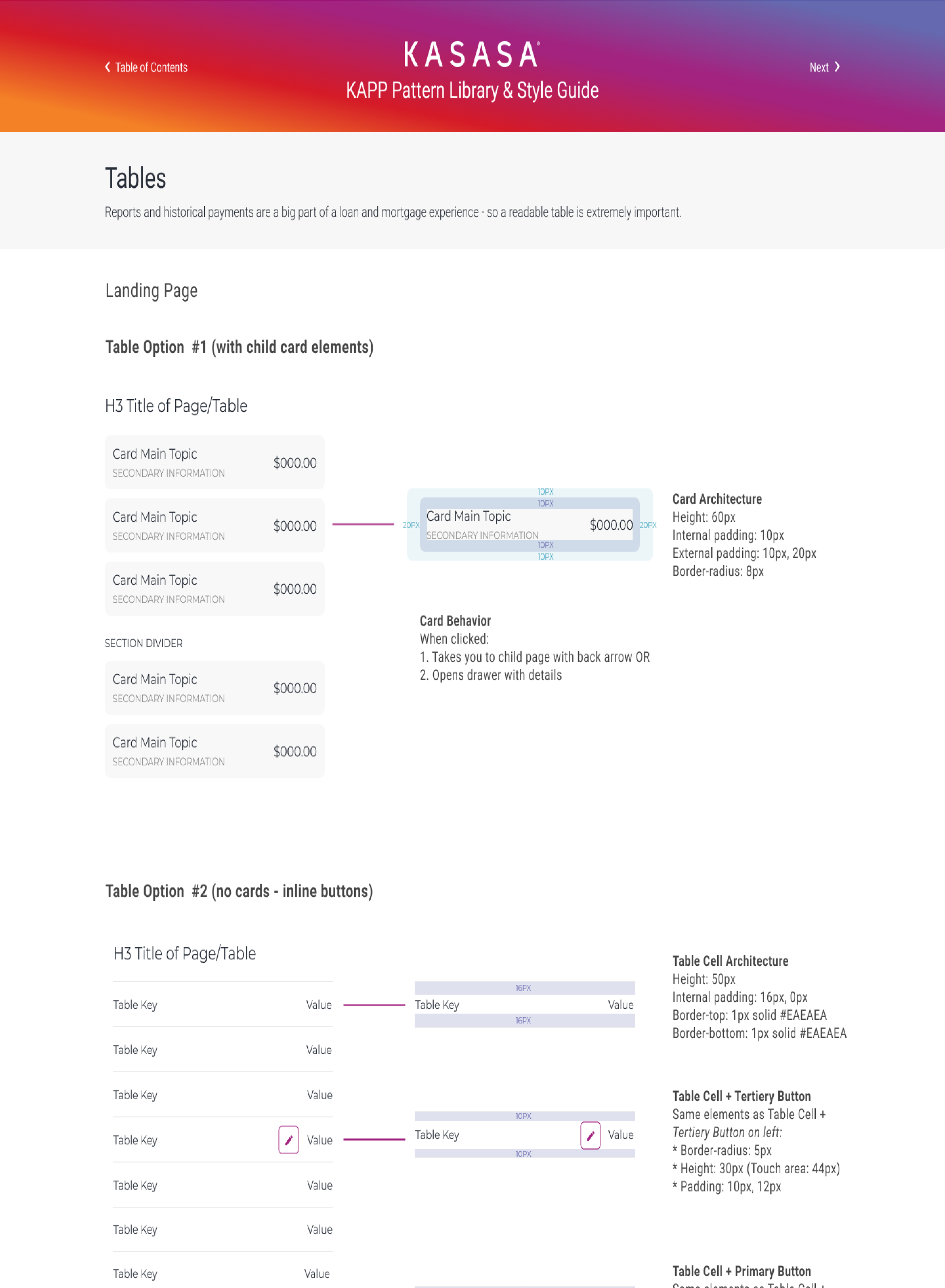
A dedicated team, sometimes called the design systems team, design infrastructure, or design platform, owns the system end-to-end. They build components, set standards, manage documentation, and review contributions from other teams.
Best for: Organizations with 50+ designers, mature product orgs, or companies where brand and accessibility consistency are non-negotiable (fintech, healthcare, enterprise SaaS).
Advantages:
- High consistency across products and platforms
- Clear accountability, there's always someone responsible
- Dedicated bandwidth for system quality
Disadvantages:
- Can become a bottleneck if the central team is under-resourced
- Risk of building for the system rather than for real product problems
- Consumers (product teams) may feel like the system doesn't reflect their needs
What failure looks like: Product teams start maintaining their own local component libraries because the central team's review queue is too slow. The system technically exists but isn't used.
2. Federated Governance
Ownership is distributed across product teams, with a loose coordinating structure (often a working group, guild, or rotating committee) to manage cross-team consistency and resolve conflicts.
Best for: Organizations with strong team autonomy, multiple product lines with different UX needs, or companies that have tried centralized governance and hit the bottleneck problem.

Advantages:
- Components are built by the people closest to real product problems
- Higher adoption because teams have ownership over what they contribute
- Scales naturally as the org grows
Disadvantages:
- Consistency requires active coordination, it doesn't happen automatically
- Without a tiebreaker authority, decisions stall
- Documentation quality is uneven across contributors
What failure looks like: The system fragments into product-specific forks. Teams share the same Figma library but they've each detached components and gone in different directions. Technically federated; functionally fractured.
3. Hybrid (Federated + Core Team)
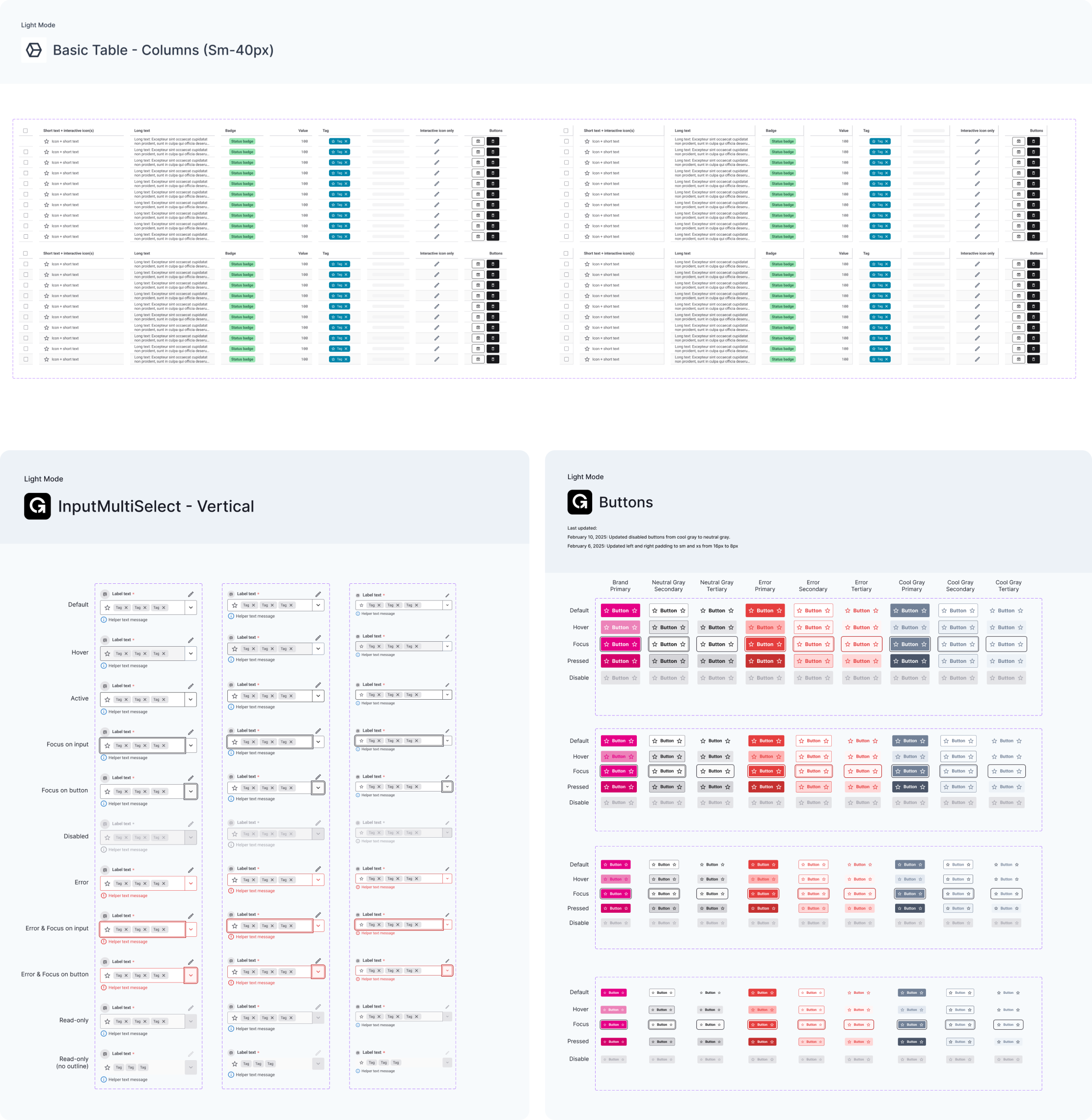
A small core team owns the foundational layer (tokens, primitives, accessibility standards, documentation infrastructure), while product teams own domain-specific components and patterns. The core team serves as a platform, not a gatekeeper.
Best for: Most organizations above ~20 designers. This is the governance model that scales best across different growth stages.
Advantages:
- Core consistency is protected without creating a bottleneck
- Product teams have real ownership and contribution pathways
- The core team stays focused on leverage, not feature parity
Disadvantages:
- Requires explicit contract between the core team and product teams about what belongs in each layer
- Contribution workflows need to be documented and maintained
- Harder to staff correctly, the core team needs to be both excellent designers and excellent systems thinkers
What failure looks like: The boundary between "core" and "domain" is never clearly defined, so everything escalates to the core team anyway. You've built a centralized model and called it hybrid.
Design System Maturity Model
Governance can't be more sophisticated than your organization is ready for. Before choosing a model, it helps to understand where your design system sits on the maturity curve.
Stage 1: Ad Hoc No formal system exists. Designers share a Figma file or a Storybook instance, but there's no documentation, no versioning strategy, and no ownership. Components are reused by copy-paste.
Governance need: Assign one owner. Establish a contribution process. Start with a token layer.
Stage 2: Structured A system exists and is actively maintained by one team or individual. Core components are documented. Engineers have access to a component library. Adoption is uneven across teams.
Governance need: Formalize the ownership model. Define a contribution process. Begin measuring adoption.
Stage 3: Managed The system is adopted across most product teams. There's a versioning strategy, a deprecation process, and documented standards. Governance model is explicit and understood.
Governance need: Move from reactive maintenance to proactive investment. Establish design system metrics. Build a roadmap process that includes consumer input.
Stage 4: Optimized The system is a strategic asset. It has measurable impact on velocity and quality. Governance is lightweight because the system's value is widely understood. Teams contribute without being asked.
Governance need: Defend the resource investment with ROI data. Evolve the system ahead of product needs rather than behind them.
Most organizations that contact us sit at Stage 2 moving toward Stage 3. The component library exists. The problem is adoption, contribution, and the absence of a clear governance model that makes both sustainable.
Design System Metrics: How to Measure What's Working
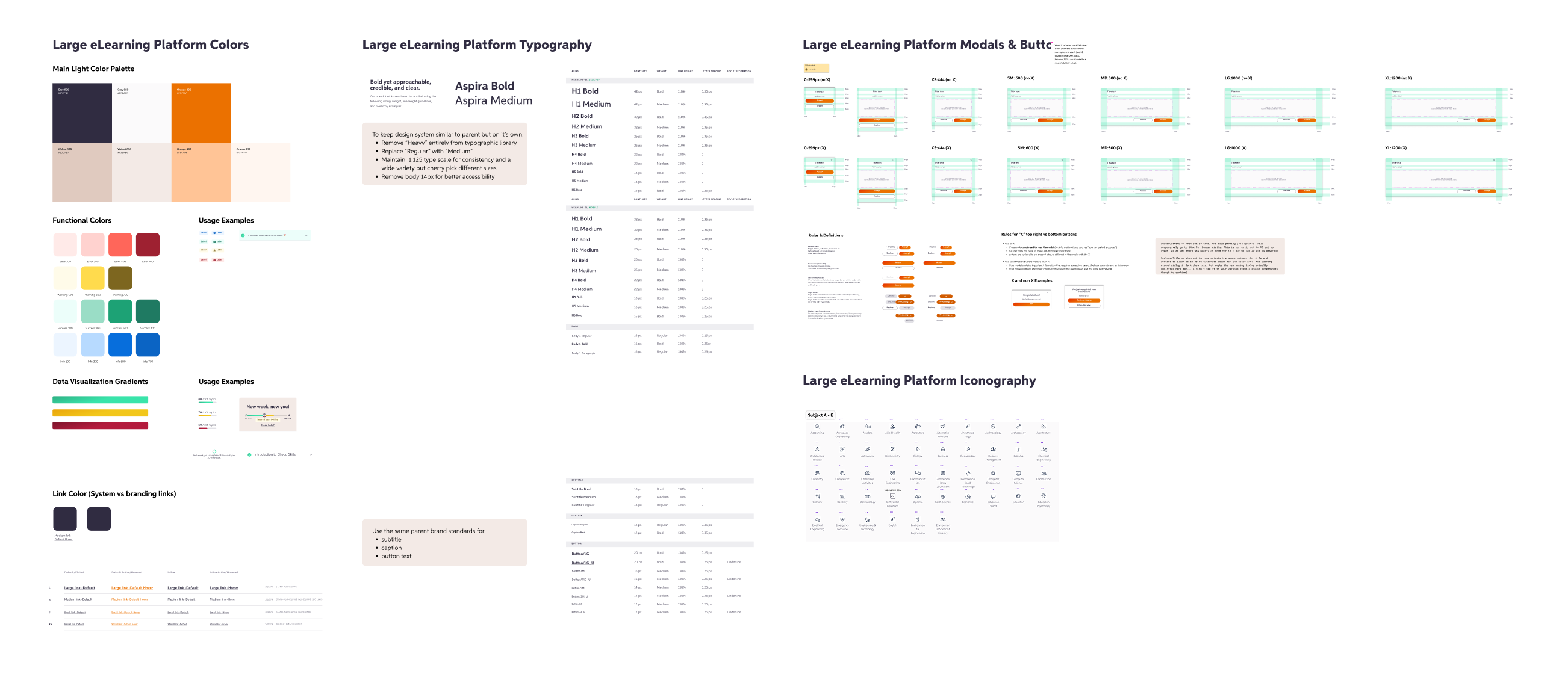
A design system without metrics is a system without accountability. Here's what's worth measuring at each level.
Adoption Metrics
- Component coverage rate: What percentage of production UI is built using system components vs. custom/one-off code?
- Adoption by team: Which product teams are using the system, and which aren't? Low adoption is always a signal, either of governance failure or system quality issues.
- Contribution rate: How many components or patterns were contributed by teams outside the core team in the last quarter?
Velocity Metrics
- Design-to-handoff time: Has the system reduced the time between design completion and developer handoff?
- Time to first meaningful screen: For new features, how long does it take to get from a brief to a working prototype or first implementation?
Quality Metrics
- Accessibility compliance rate: What percentage of system components meet WCAG 2.2 AA standards?
- Cross-platform consistency score: Are components rendering correctly across web, iOS, and Android? This is especially relevant for multi-platform design systems.
- Regression rate: How often do system updates break existing implementations downstream?
Health Metrics
- Documentation coverage: What percentage of components have complete, current documentation?
- Backlog age: How long do contribution requests sit before they're reviewed and resolved?
- Detachment rate: In Figma or production, how often are components being detached or overridden? High detachment rates indicate the system isn't meeting real needs.
The trap most teams fall into is measuring what's easy (component count, Figma file health) rather than what's meaningful (adoption, velocity impact, downstream quality). A design system with 300 components and 30% adoption is worse than a system with 80 components and 90% adoption.
Design System ROI: Making the Business Case
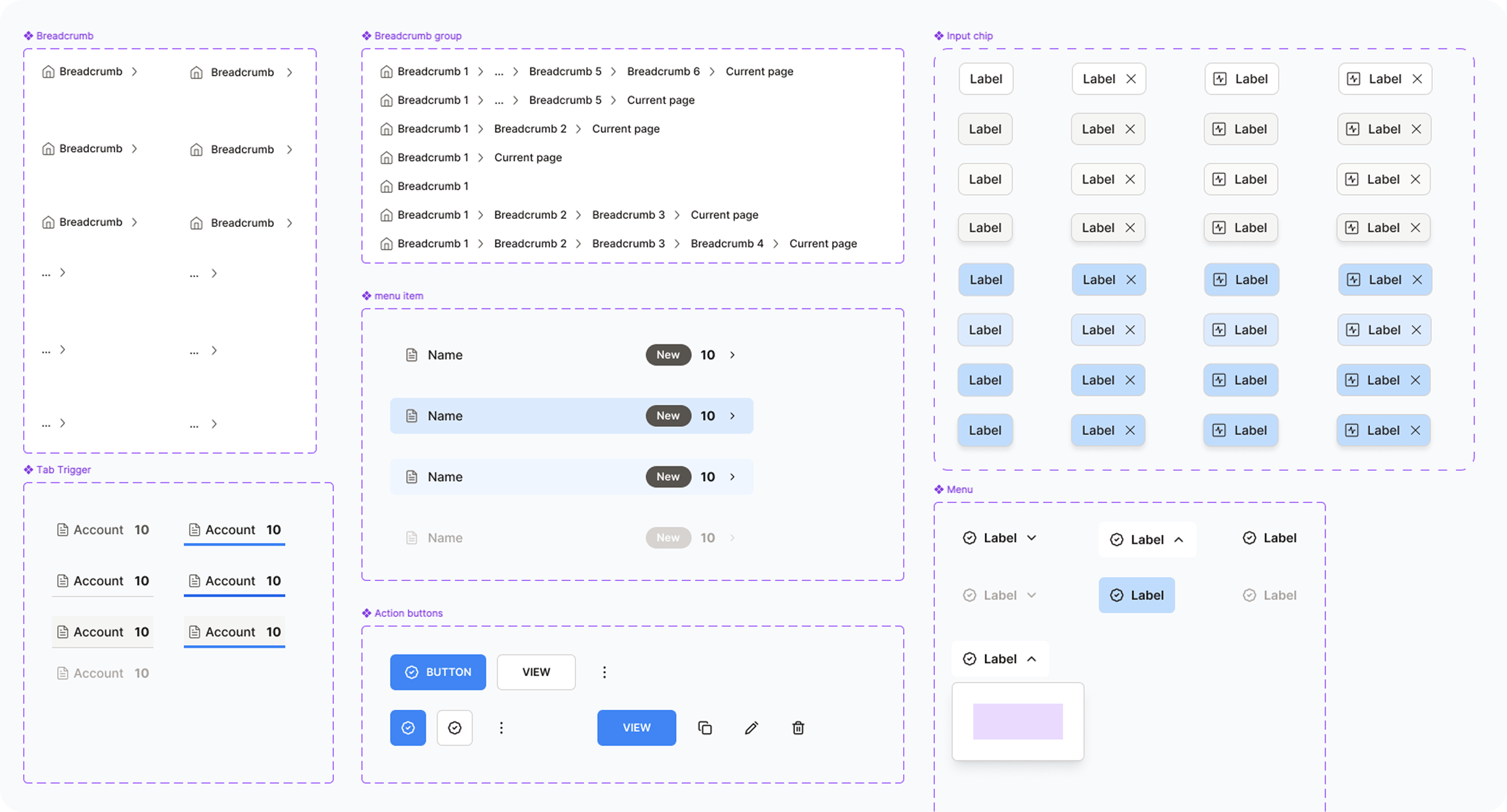
Design system investment is hard to justify without a framework for quantifying return. These are the three ROI arguments that hold up in budget conversations.
1. Velocity ROI
The most concrete argument. If a design system reduces the time a designer spends producing a screen from 4 hours to 45 minutes, and you have 10 designers building 3 features per week, the compounding time savings are substantial. Document baseline velocity before the system and measure against it quarterly.
2. Consistency ROI
Inconsistent UX creates real support and retention costs. Users who encounter inconsistent behavior in a product are more likely to abandon workflows, generate support tickets, or churn. A system that enforces consistent interaction patterns reduces these downstream costs, even if they're harder to attribute directly.
3. Accessibility ROI
Accessibility compliance built into a system is exponentially cheaper than accessibility remediation in production. An accessibility issue caught at the component level costs minutes. The same issue caught in a shipped product costs audits, legal review, and re-engineering across every instance where that component was used.
For organizations in regulated industries (healthcare, fintech, edtech), this third argument is often the strongest.
What Good Governance Actually Looks Like
Governance documentation doesn't need to be a 40-page spec. The organizations with the healthiest design systems we've worked with typically have:
- A one-page governance brief that defines the ownership model, contribution process, and decision rights
- A documented SLA for contribution review (e.g., "all contribution requests reviewed within 5 business days")
- A quarterly system review that includes input from consumer teams, not just the core team
- A public-facing roadmap that gives product teams visibility into what's coming
The goal is to make the system feel like infrastructure, not a service that teams have to negotiate access to.
How SeaLab Approaches Design System Governance
When we work with organizations on their design systems, governance is always part of the engagement, not an afterthought.
We run a structured audit to establish where the system currently sits on the maturity model, identify the governance gaps creating the most friction, and recommend a model that fits the organization's actual structure (not an idealized one).
We also help organizations build the contribution infrastructure: the processes, documentation templates, and review workflows that make a governance model real rather than theoretical. We've done this at enterprise scale with the Eptura design system, unifying components across more than ten products, and at startup scale with Goods Inc's MVP design system, built alongside the product launch.
Summary
Design system governance models define who owns the system, how decisions get made, and how the system evolves. The right model depends on your organization's size, structure, and maturity stage, and the wrong model (or no model at all) is usually the root cause when a technically solid system fails to deliver.
The three primary models:
- Centralized: best for large orgs that need strict consistency
- Federated: best for autonomous teams with diverse product needs
- Hybrid: the model that scales best for most growing organizations
Measure adoption, velocity, and quality, not just component count. Build the ROI case around time savings, consistency, and accessibility. And make governance documentation feel like infrastructure, not governance theater.
A design system is only as valuable as its adoption. Adoption follows governance.